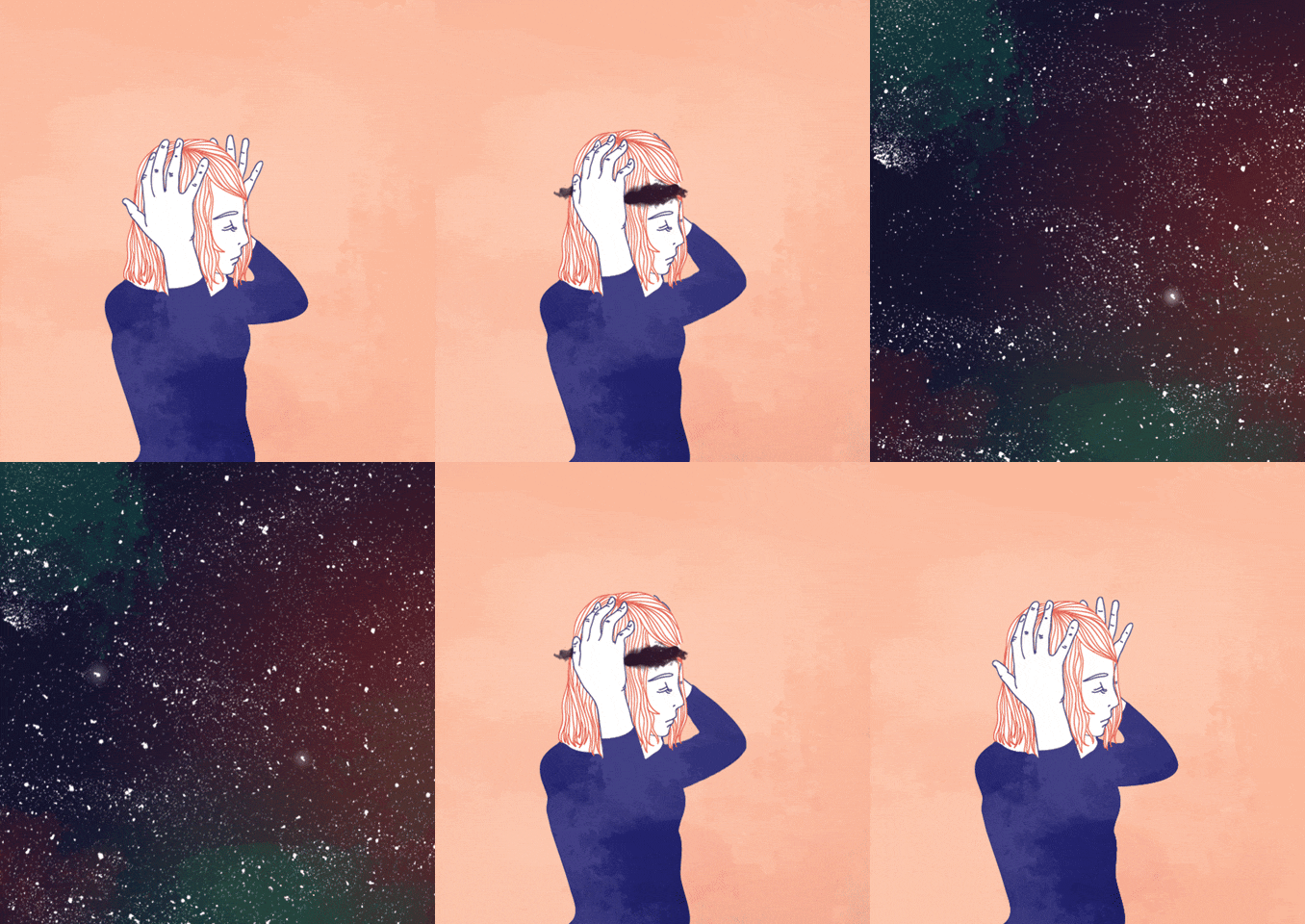
"Children are naturally curious and open to learning, but as we reiterate throughout this book, they need the support of adults in their lives who understand this."-Laura McLaughlin Taddei & Stephanie Smith Budhai, Nurturing Young Innovators (2017)
The first chapter of Nurturing
Young Innovators, entitled “Incorporating Creativity, Innovation, and
Technology Integration in the Early Years,” by Taddei and Budhai (2017) deals a
lot with talking about how not only do we need to foster and instill curriculum
goals within the children we teach and their minds, but we also need to allow
their creativity to grow and develop. In their introduction Taddei and Budhai
(2017) state: “The earlier we encourage children to think creatively and to
innovate, the more natural this mindset will become” (p. xiii). They go on to
state throughout their first chapter that modern day teacher are called to and encouraged
to develop a learning environment that not only meets curriculum goals but
fosters creativity and critical thinking, all the while promoting digital
literacy (p. 1). That is a lot of information to unpack and disseminate onto
the children we teach, because if we really think about it, we only have the
students that we teach for such a small amount of time.
The remainder of chapter one discusses how to allow our
students to be innovators and creators, all the while teaching them about digital
literacy, including digital safety. These educator goals are to all align with
the ITSE standards. I think the biggest take away from the following chapter is
the following statement: “The more time we all provide our students to be
creative and innovative, the more they will realize that everyone can be
innovative” (p. 4). I think that is such an important part of being a teacher—we
need to show our students that they can do and can achieve anything, regardless
of what they believe their limits and their skill sets are. Our students,
therefore, “…need hands-on opportunities to think and work creatively with others—and this approach has
been shown to be effective for others, too” (p. 5). We need to actively engage
them in the content and tasks that we provide them, and the rest of the first
chapter deals with wonderful projects that future and current teachers can
incorporate in their classrooms.
I’m discussing chapter one heavily because for this week, we
were required to read chapter five, which was entitled “Makerspaces and
Innovation, Labs in the Classroom, Home, and Community.” This chapter is quite
important to the aforementioned discussion on creativity because these are the
spaces that allow for creativity and innovation to happen in the classroom,
beyond just the education of the curriculum. Taddei and Budhai (2017) further
state: “…Students can gain skills such as empathy, collaboration,
communication, creativity, and critical thinking—skills that are essential for
surviving and thriving in a global society” (p. 95). These “makerspaces and
labs” are key to allowing creativity and innovation to thrive in both the
school and home settings. These spaces are quite important because they allow
for students to develop the above attributes, which they’re going to need when
they go out into the real world. The rest of the chapter discuss how and where
to create these spaces for innovation and creativity in the home and school environments.
I think in a world that wants creative individuals, but
often prizes results over creativity and innovation, we need to start shifting
our teaching framework. Yes, tests and their scores are important in making
sure our students are on task and understanding the allotted material for their
age groups. Those tests and scores, however, should not come at the cost of art
programs and fun, creative projects, because no score could ever replace the
creativity and curiosity that is found within children over and over again.
I’d like to end with the following
quote from Pablo Picasso: “Learn the rules like a pro, so you could break them
like an artist” (“Creativity Quotes,” n.d.).
Comments
Post a Comment